Rocket.Chat on VCloud is a self-hosted team communication platform: channels, direct messages, threads, file sharing, and voice and video calls. It's the most established open-source alternative to Slack.
Before you install#
A small team runs comfortably on a modest tier. Rocket.Chat becomes more memory-sensitive as concurrent connections grow, so a larger team, or heavy use of voice and video, is a reason to plan for more headroom - see Plans.
Installing it#
From the App Store, find Rocket.Chat and select Install.
Choose organization scope - this is almost always a shared, team-wide instance - and leave Authentication Mode on managed so single sign-on is wired up automatically:
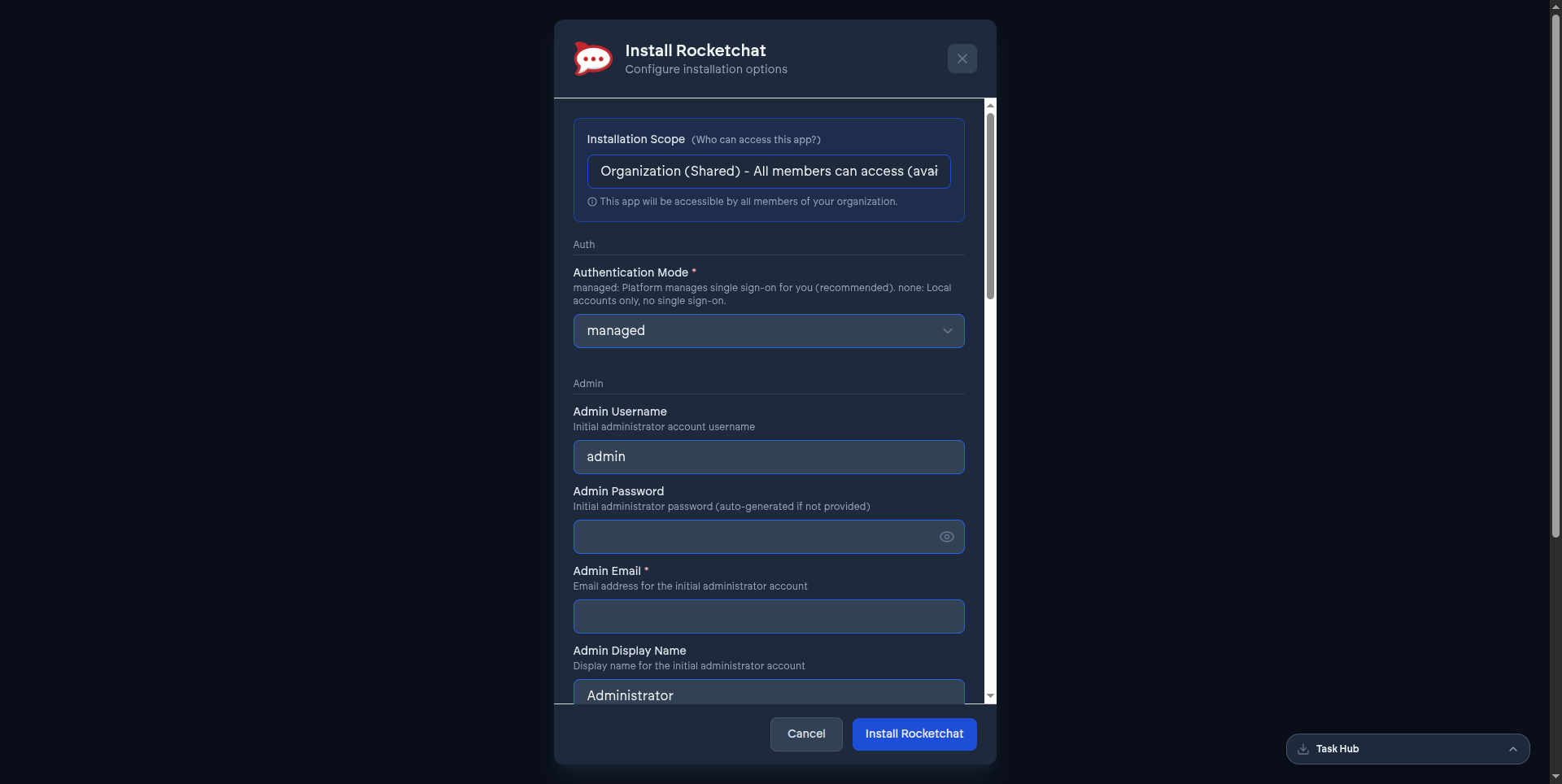
Selecting Install Rocketchat starts the deployment right away:
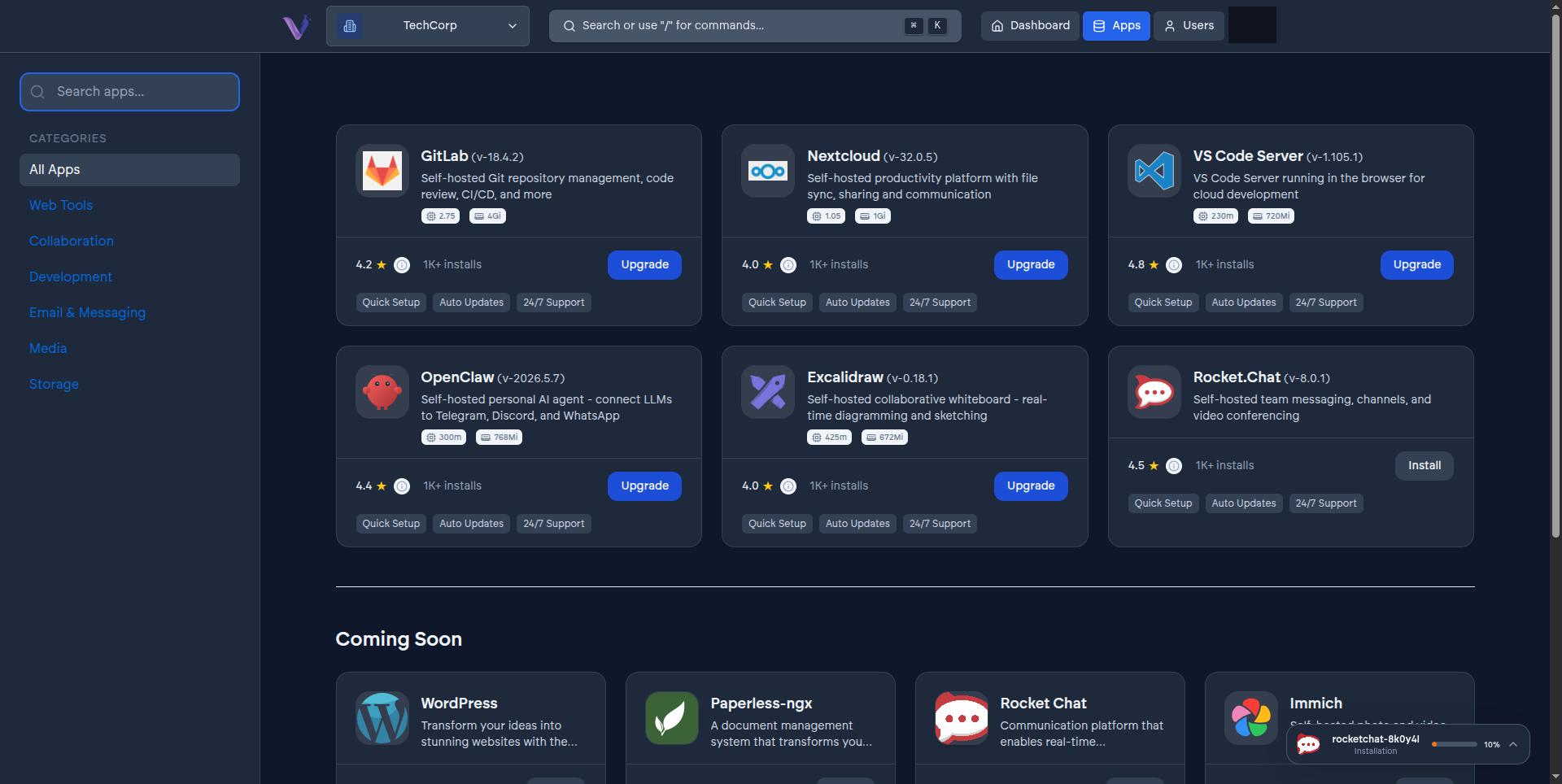
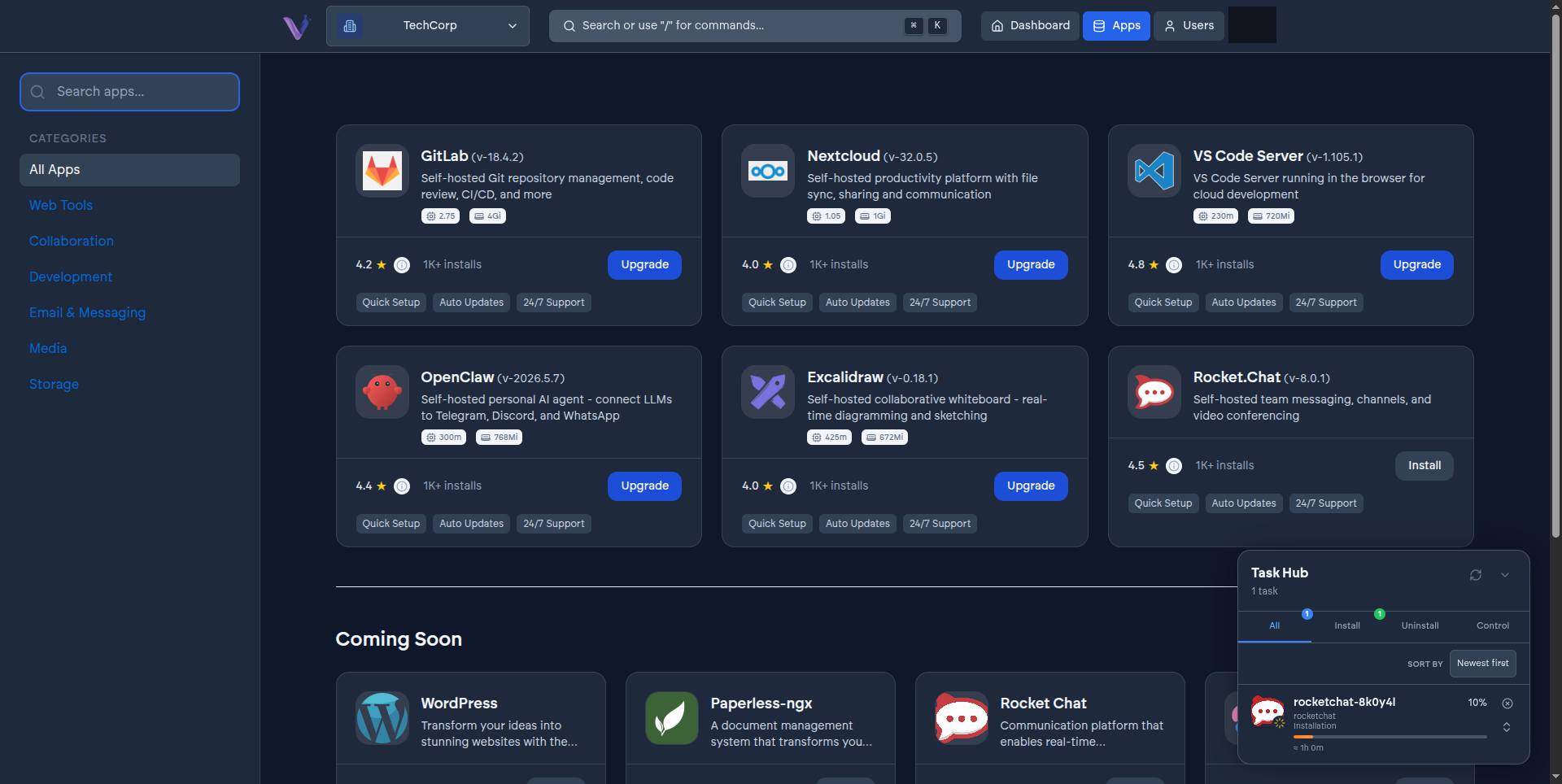
Track progress from the Task Hub - a fresh Rocket.Chat install can take up to about an hour:
Select Open once running. You're signed in automatically with your VCloud account.
What VCloud adds on top of upstream Rocket.Chat#
- Single sign-on for the web app and every client.
- Correctly configured mobile push notifications - a frequent failure point on self-managed installs, where the app can look broken while the server is actually fine.
- A properly configured connection path for real-time messaging, so chat doesn't quietly degrade to slow polling.
- Automated backups that account for the specific way Rocket.Chat's database needs to be handled to remain restorable.
Message history#
Unlike Slack's free tier, nothing is hidden behind a retention limit - every message stays stored and searchable, bounded only by your instance's storage.
Migrating in#
Rocket.Chat includes a Slack importer that brings across channels, messages, and users from a standard Slack export. Whether direct messages come across too depends on what your Slack plan permits exporting.